




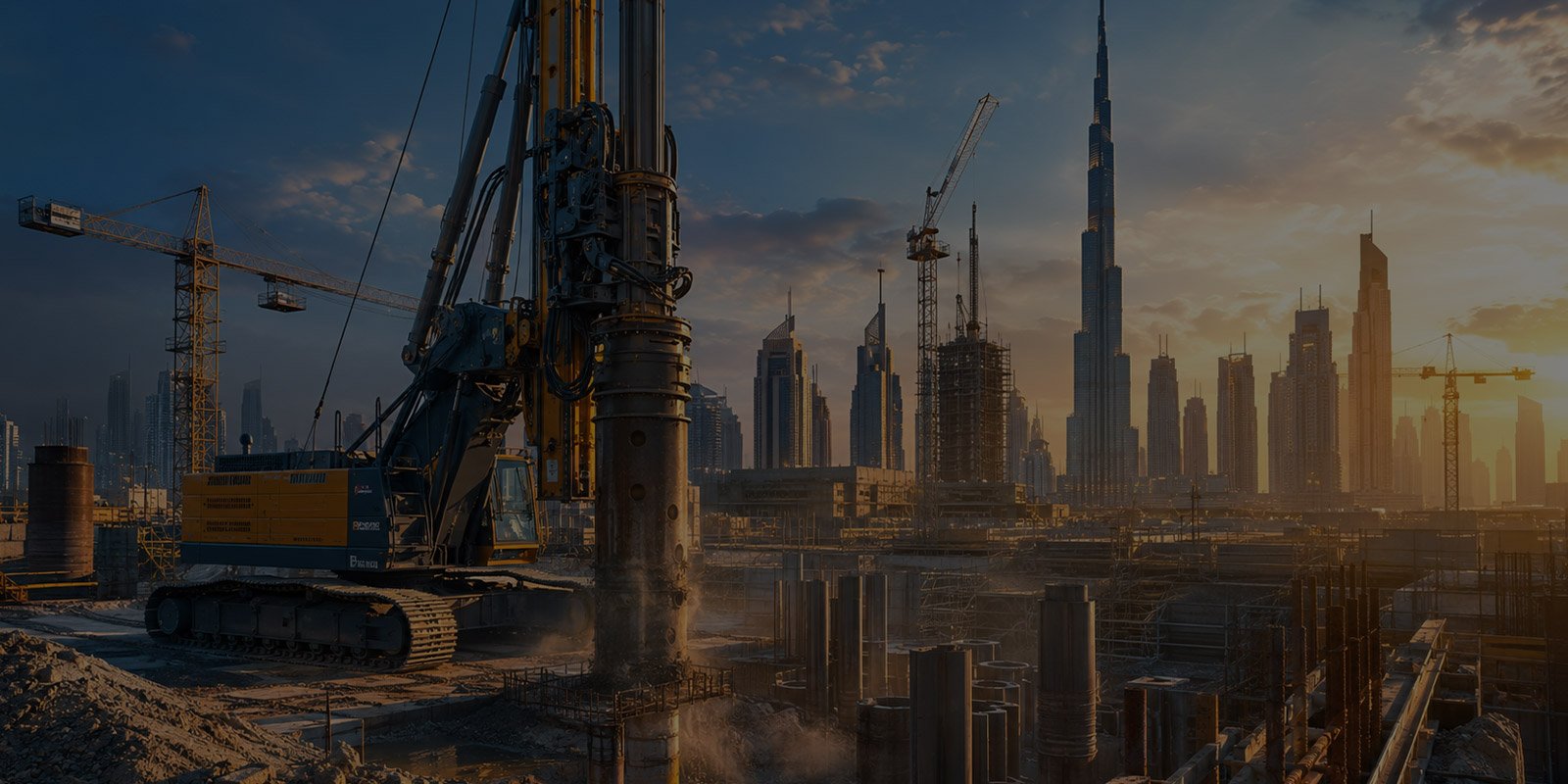
Why Piling
When the Ground Cannot Carry the Structure, the Foundation Must Go Deeper
Piling is used when near-surface soil cannot safely support the structural loads of a building, industrial facility or infrastructure project.
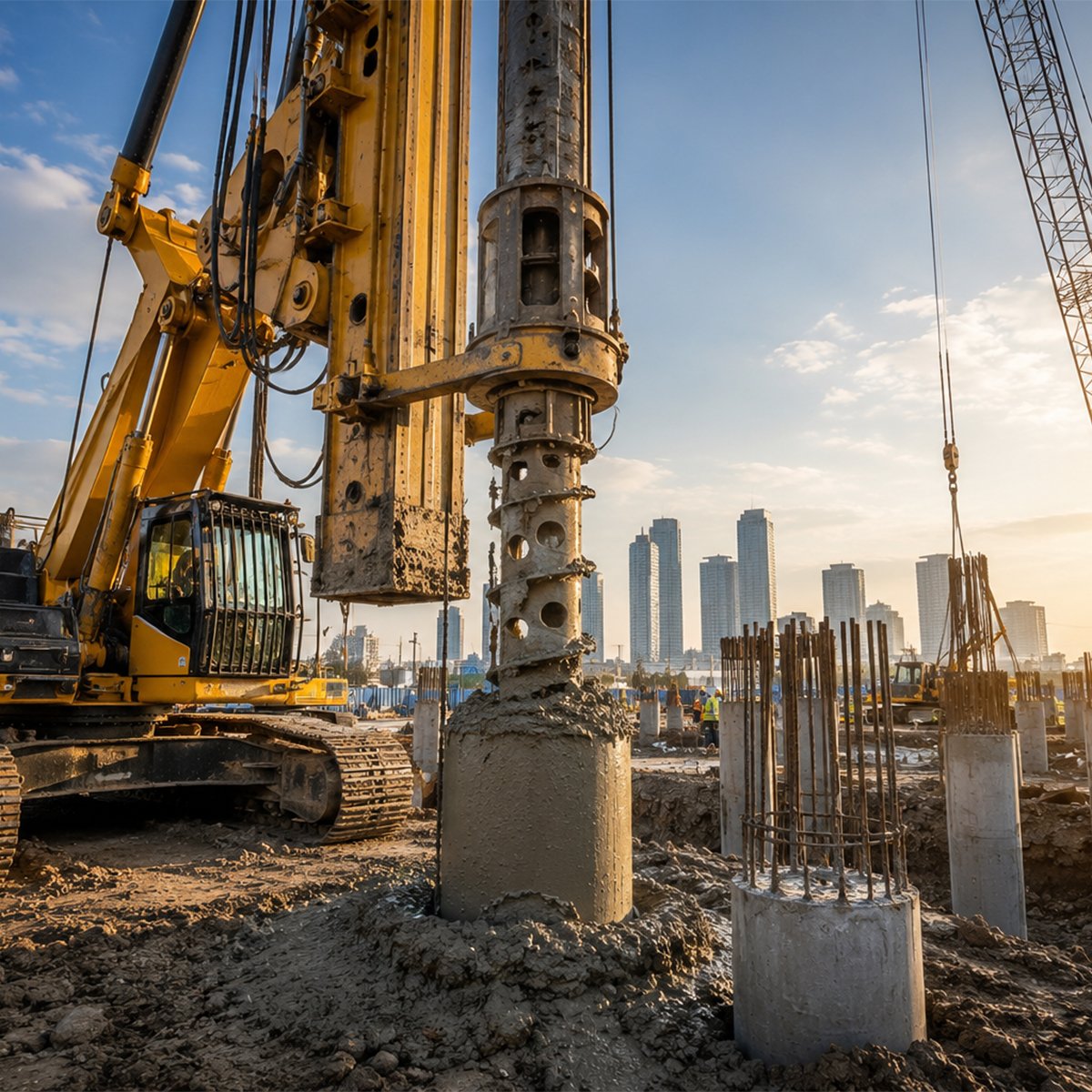
Piles transfer loads to deeper, more competent soil or rock through shaft resistance, end bearing or a combination of both. By moving structural demand beyond weak, compressible or variable surface layers, piling helps control settlement and provides the stability required for safe long-term performance.
In the UAE, projects often involve reclaimed land, loose deposits, variable strata, groundwater and demanding urban site constraints. Piling allows foundation systems to be engineered around these conditions while supporting high-rise buildings, commercial developments, bridges, industrial facilities and other major structures.
The most important part of a structure is often the part no one can see.
Strength, Flexibility and Controlled Installation
Conditions That Commonly Lead to Deep Foundations
Piling is not chosen simply because a structure is large. The need for deep foundations is determined through geotechnical investigation, structural loading, settlement criteria and construction constraints.
- Weak, loose or compressible soils near ground level
- Heavy structural or equipment loads
- High-rise and multi-storey developments
- Strict settlement or differential-settlement limits
- Variable soil or rock levels across the site
- Foundations close to existing structures or property boundaries
- Structures exposed to uplift, lateral or dynamic forces
- Projects requiring foundations below scour, fill or unsuitable material
The Engineering Reasons Behind Piling
Shallow Foundations
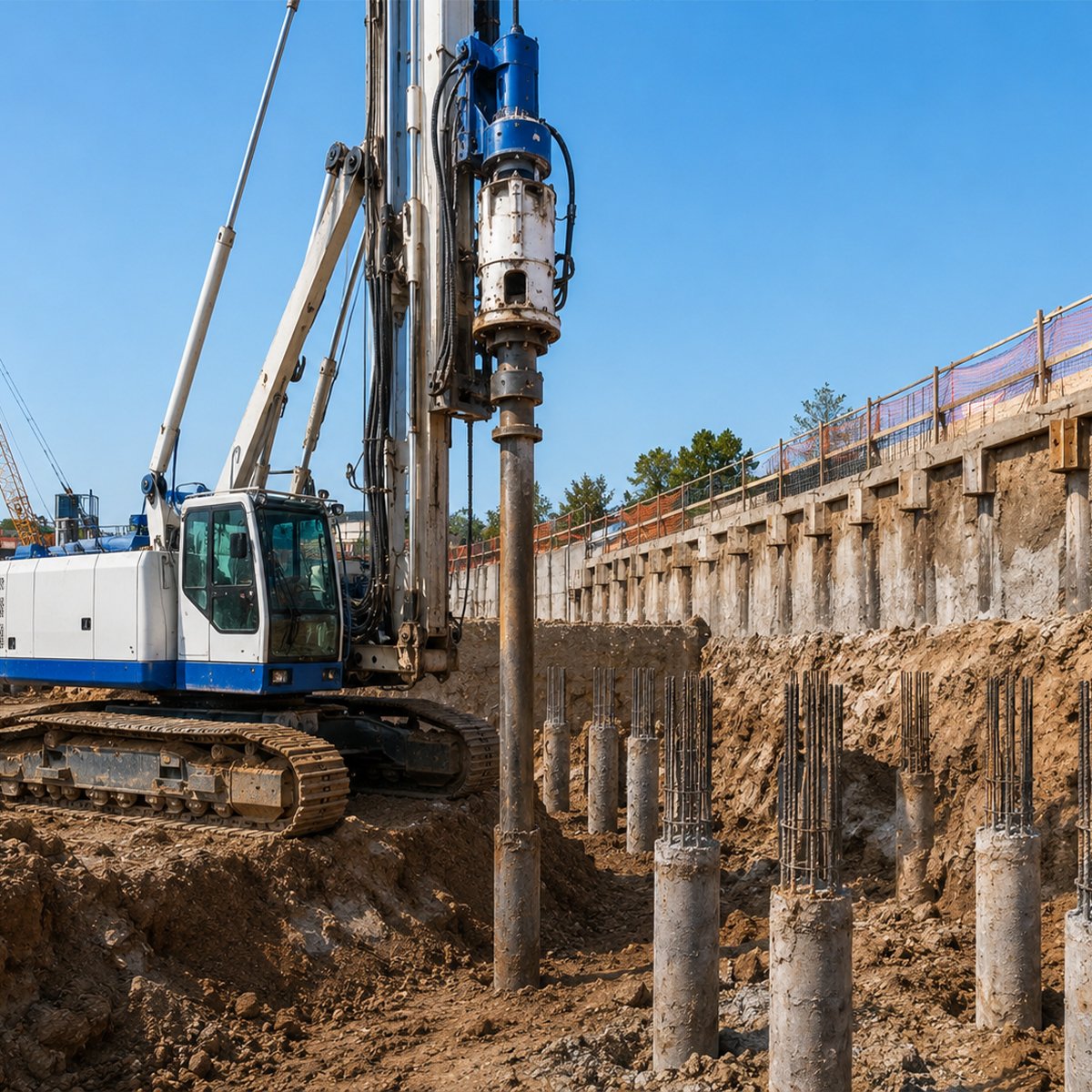
Shallow foundations transfer loads close to existing ground level. They are generally suited to lighter structures and sites where near-surface soil has adequate bearing capacity and settlement can be controlled.
- Loads are comparatively moderate
- Competent soil exists near the surface
- Settlement remains within acceptable limits
- Excavation depth is practical
Deep Foundations
Deep foundations extend through weak or variable ground and transfer loads to deeper, stronger layers. They are selected when shallow solutions cannot meet structural, settlement or site requirements.
- Heavy structural loads
- Weak, loose or compressible upper soil
- High uplift or lateral demand
- Restricted urban or sensitive sites
Why Foundation Decisions Matter Across UAE
The UAE presents a wide range of subsurface conditions, from loose and variable deposits to reclaimed ground, fill, groundwater and changing rock levels. Large developments also operate within tight boundaries, near roads, utilities and existing structures.
These conditions do not automatically mean that piling is required. They do mean that foundation selection must be based on reliable geotechnical information, structural demand and a buildable installation method.
Piling allows engineers to respond to these challenges with systems designed for the actual ground, load and site constraints rather than relying only on what is available at the surface.
Different Projects Need Different Foundation Solutions
How Foundation Decisions Are Made
Foundation selection begins with reliable information. Structural loads, soil and rock conditions, groundwater, nearby structures, utilities, access, programme and project specifications must all be reviewed together.
PDS Piling works within approved project designs and coordinates with consultants, contractors and site teams to plan equipment, working platforms, construction sequence, quality inspections and testing requirements. This approach helps turn foundation design into a safe and buildable site operation.
Understanding Piling and Deep Foundations
Piling is a deep-foundation method that transfers structural loads through weak upper ground into deeper soil or rock with suitable capacity.
The decision is based on structural loads, geotechnical investigation, groundwater, settlement criteria, surrounding structures and construction constraints.
Shallow foundations transfer load near ground level, while deep foundations extend through weaker layers and transfer load at greater depth.
There is no single best pile type. The appropriate system depends on ground conditions, loads, access, vibration limits, programme and approved design requirements.
Yes. Drilled systems such as bored piles, CFA piles and micropiles can often be used near existing structures, subject to access, movement and vibration assessment.
Testing helps verify load performance, continuity or integrity according to project specifications and the responsible engineer's requirements.
PDS Piling supports projects in Dubai, Abu Dhabi and other UAE regions, subject to project scope, access and mobilisation requirements.