




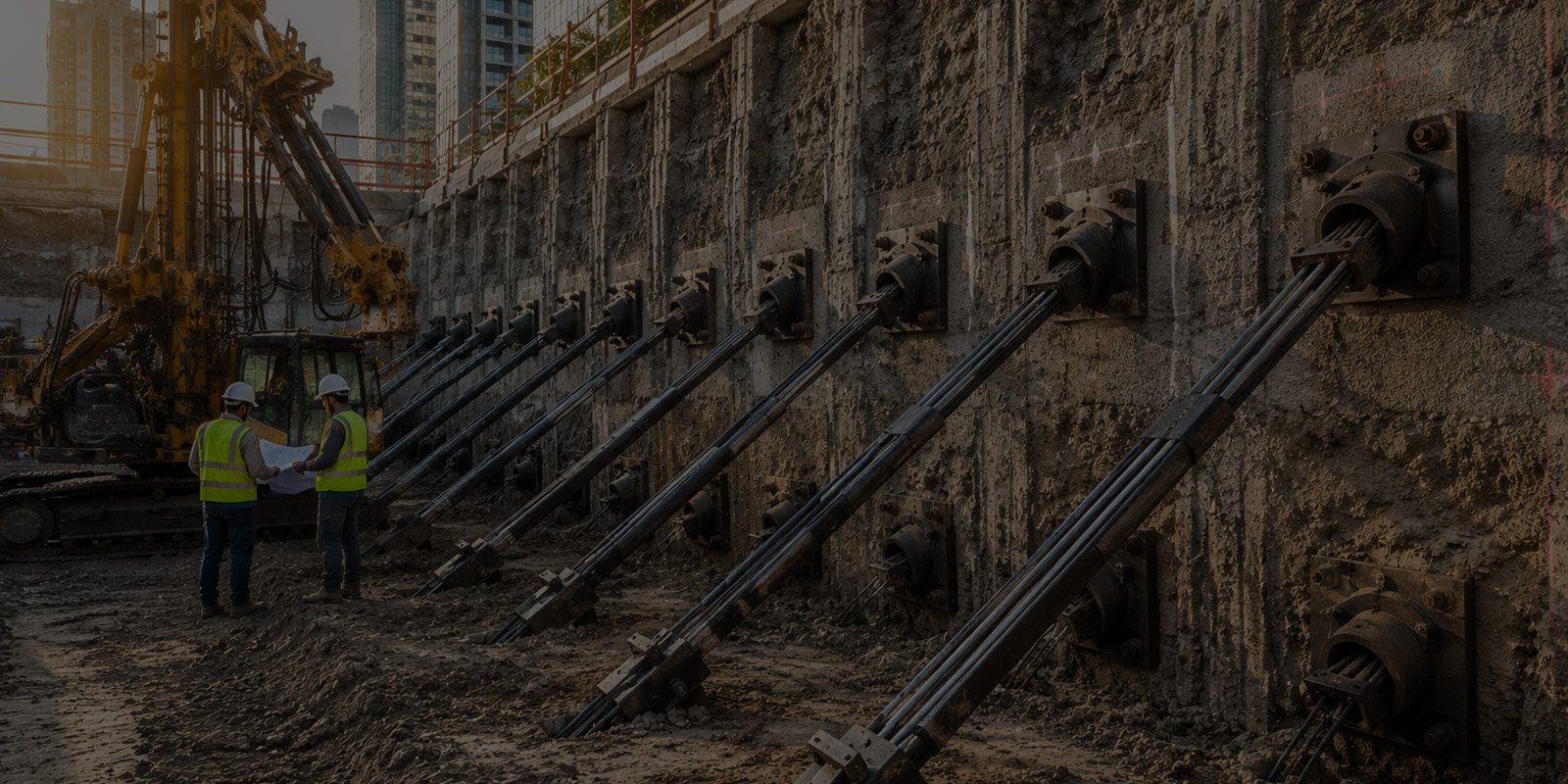
Anchors
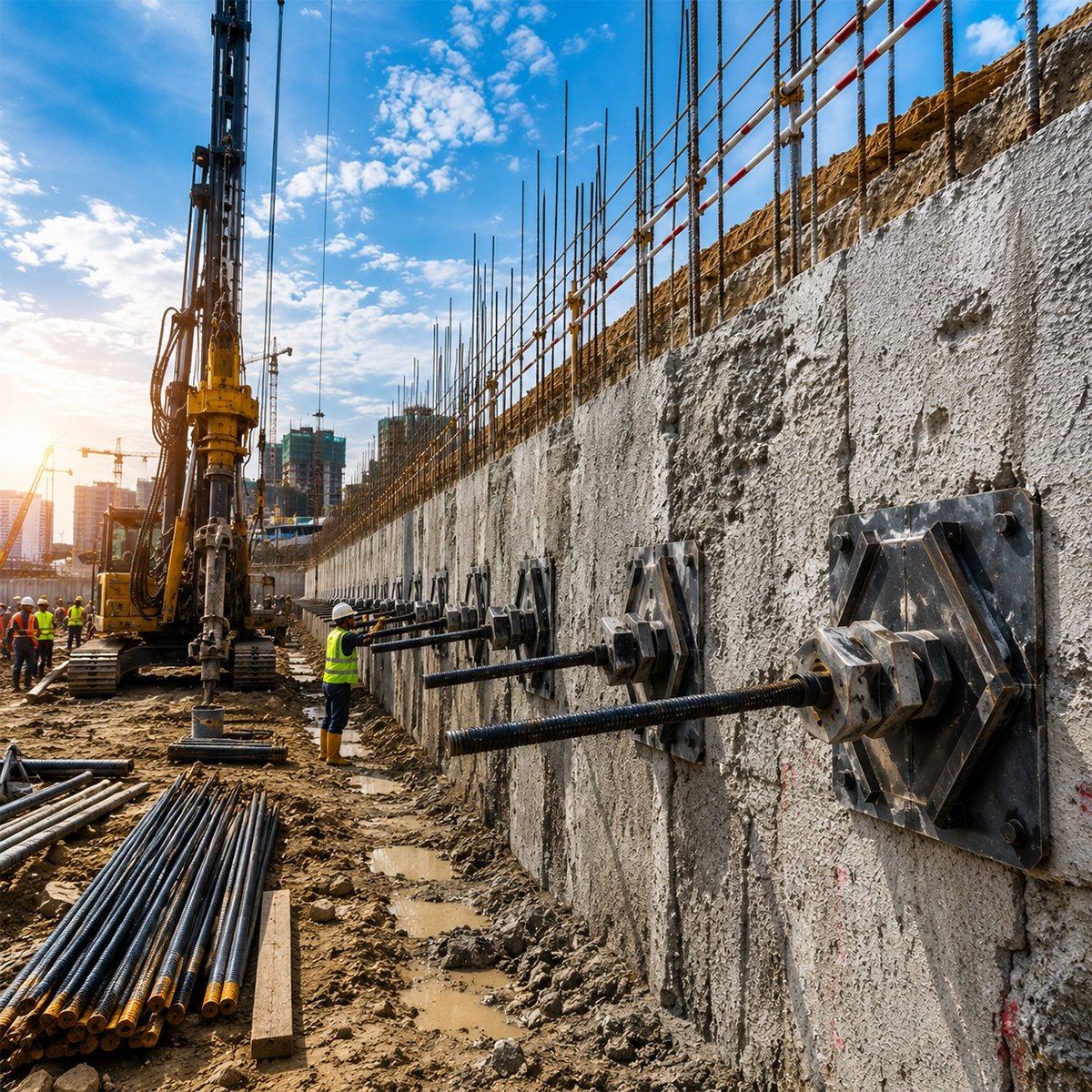
High-Performance Ground Anchors for Retention, Stability and Uplift Control
PDS Piling & Foundation Contracting LLC provides specialist ground anchor installation for shoring systems, retaining structures, deep excavations, uplift restraint and stabilisation works across the UAE and India. Ground anchors transfer tensile forces from a structure or retaining wall into a stable zone of soil or rock, helping resist lateral pressure, overturning and uplift.
Each anchor system is installed according to an approved design that defines drilling angle, free length, bond length, tendon type, corrosion protection, grout requirements and testing criteria. Our teams coordinate drilling, tendon preparation, grouting, stressing and lock-off under controlled site procedures.
Whether used as temporary tiebacks for excavation support or as permanent structural anchors, PDS Piling focuses on accurate drilling, effective bond formation, safe stressing operations and complete quality documentation.
High-Performance Ground Anchors: Retention, Stability and Uplift Control
Ground anchors are a highly effective support element where tensile resistance is required and the project design allows forces to be transferred beyond the active ground zone.
Ground Anchors for Diverse Construction Requirements
Anchor feasibility depends on property boundaries, subsurface conditions, groundwater, easements, adjacent assets and the approved structural and geotechnical design.
- Tieback support for deep excavation shoring
- Retaining walls and basement construction
- Uplift restraint for foundations and slabs
- Slope stabilisation and landslide mitigation
- Bridge abutments and infrastructure structures
- Temporary works requiring open excavation space
- Permanent anchored walls and structural restraint
- Rock anchoring and specialised geotechnical works
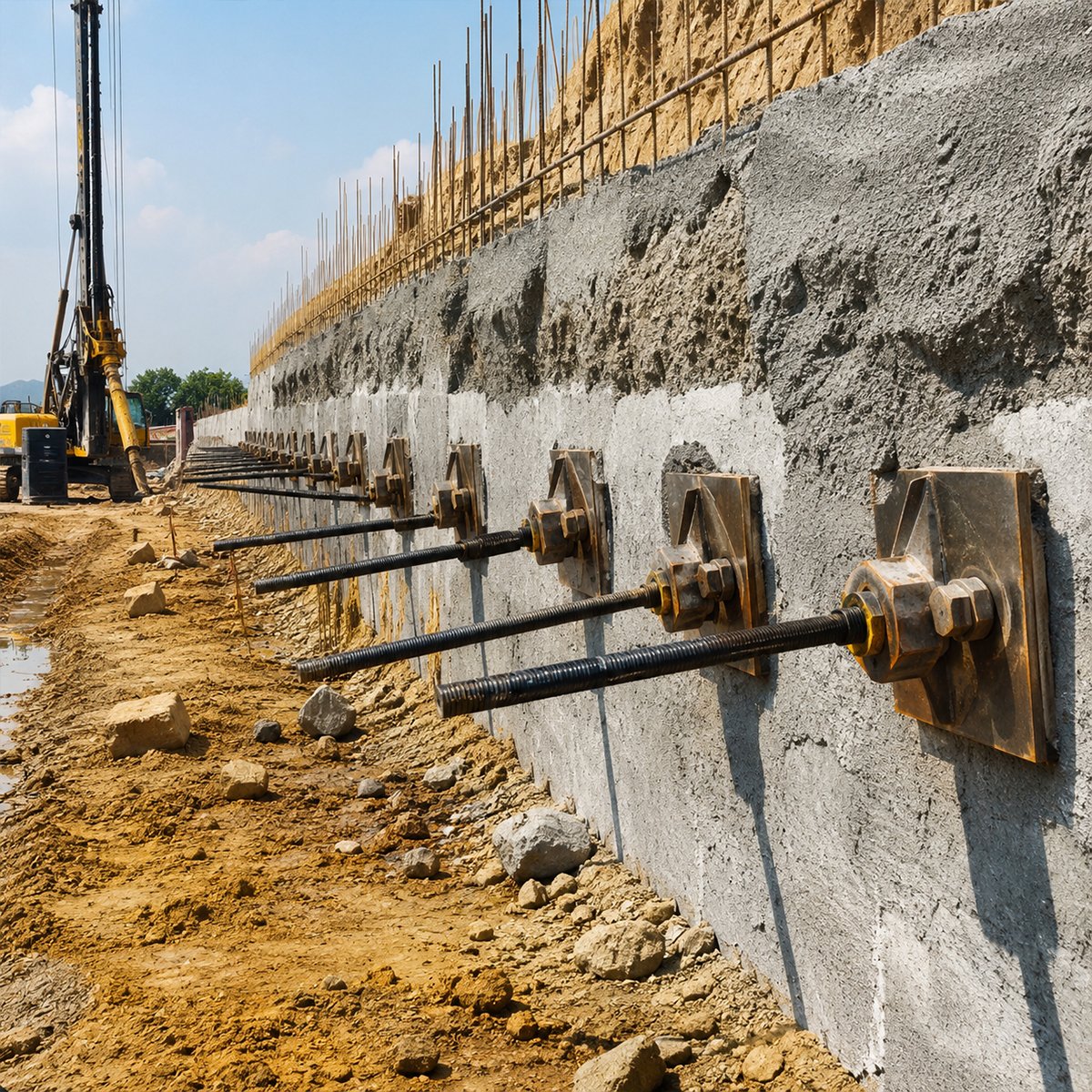
From Planning to Completed Installation
The exact construction sequence depends on the approved design, project specifications, ground conditions and site constraints.
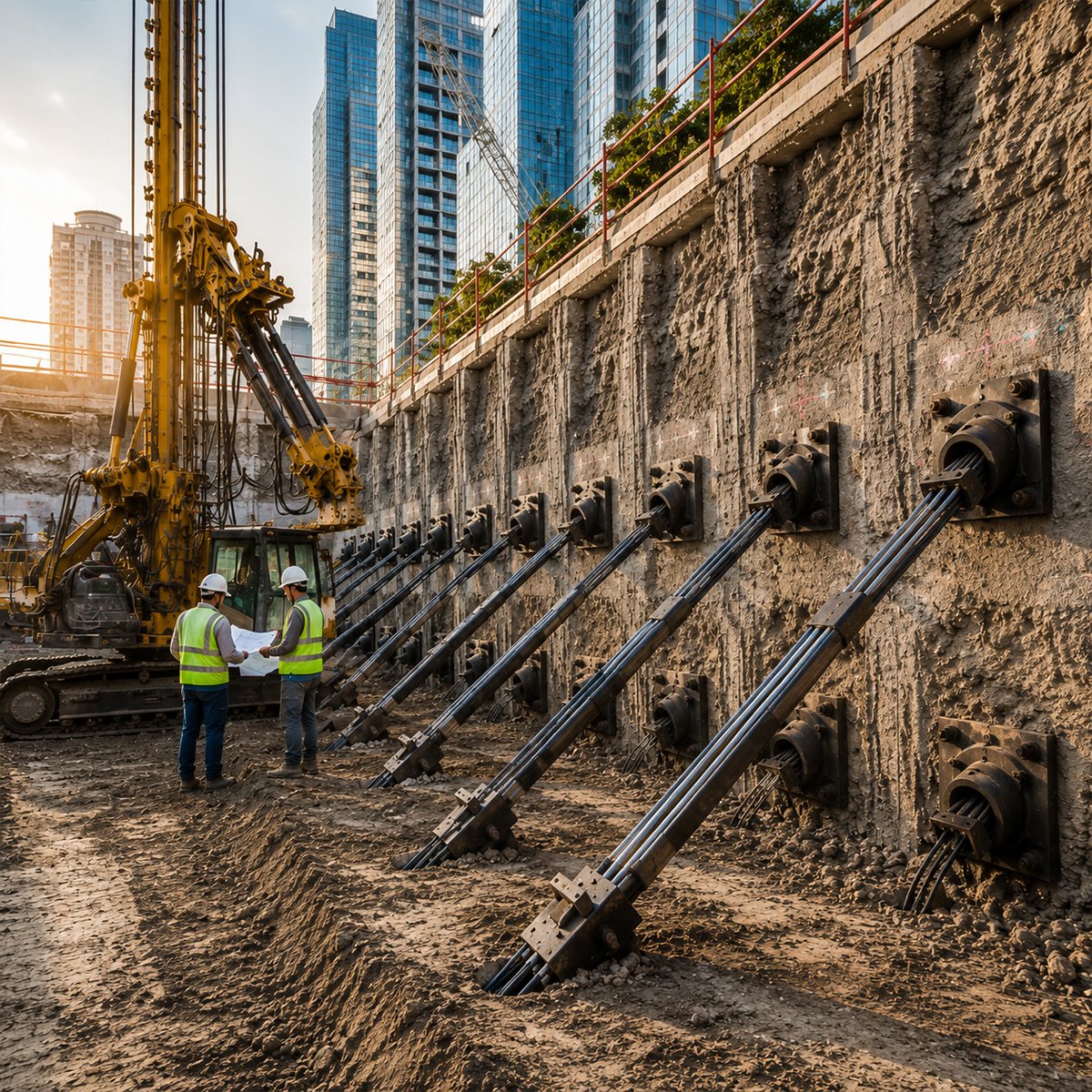
Controlled Execution You Can Depend On
Ground-anchor performance depends on the integrity of the bond zone, tendon installation, grout quality and controlled stressing. PDS Piling maintains clear inspection and test procedures for anchor fabrication, drilling, grouting, curing and load application.
Quality documentation may include bore records, tendon certificates, grout information, grout volumes, cube or strength results, jack calibration, test readings, load-extension plots and lock-off values, according to project specifications.
Need Ground Anchors for a Shoring or Retaining System?
Talk to PDS Piling about anchor loads, drilling access, boundary restrictions and project testing requirements across Dubai, Abu Dhabi and the UAE.
Ground Anchors in the UAE
A ground anchor is a tension-resisting structural element installed in soil or rock. It usually contains a tendon with an unbonded free length and a bonded length that transfers load into stable ground.
Temporary anchors support construction for a limited design period, while permanent anchors remain part of the completed structure and generally require enhanced durability and corrosion-protection provisions.
Anchors are stressed in controlled load stages using calibrated equipment. Depending on the specification, proof, suitability, acceptance or investigation testing may be required.
Installation beyond a property boundary may require legal permission, easements and approval from affected owners or authorities. These constraints must be resolved before design and construction.
Yes. Different drilling, tendon and grouting arrangements can be designed for soil or rock. Site investigation data is necessary to establish an appropriate bond zone.
Grout transfers load between the tendon and surrounding ground within the bond length, provides confinement and contributes to corrosion protection.
PDS Piling can coordinate installation, grouting, stressing and project-specified testing as part of an approved ground-anchor scope.