



Blog
Deep Foundations in the UAE: How Ground Conditions Influence Pile Design and Construction

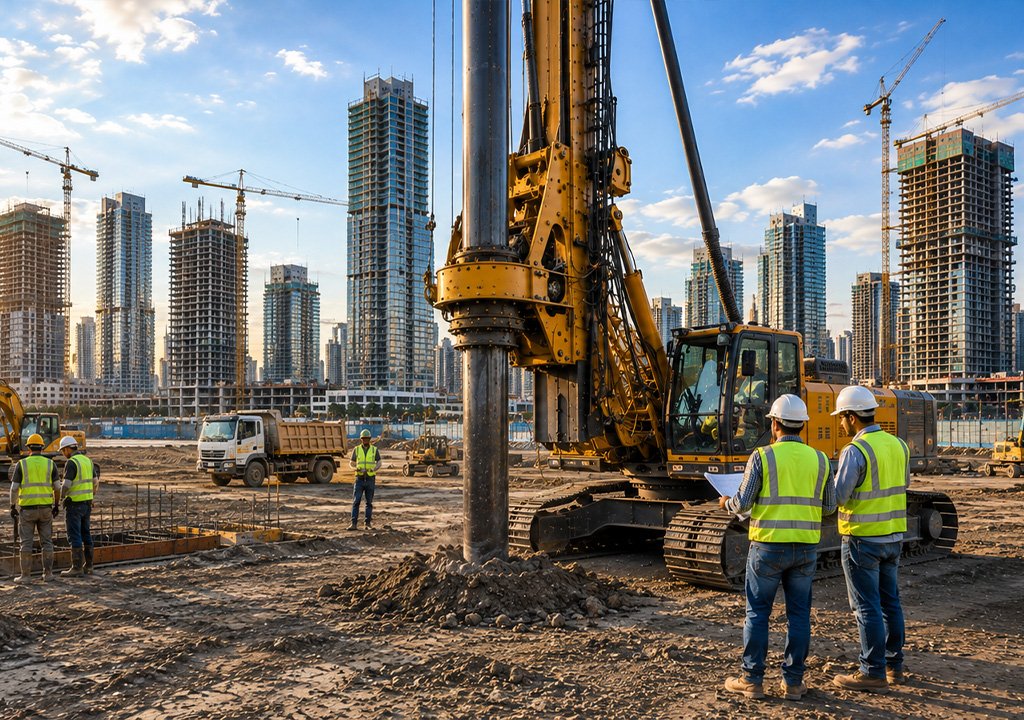
Deep foundations are used when structural loads cannot be supported satisfactorily by near-surface ground or when settlement, uplift, lateral forces or construction constraints require load transfer at greater depth. In the UAE, foundation engineering must respond to site-specific ground conditions rather than a generic idea of ‘desert soil’. Published Abu Dhabi soil data, for example, shows that deep piles are used in parts of the industrial city and that pile capacities vary by location and diameter. The practical lesson is simple: what lies below the plot matters.
The ground model comes before the piling method
A geotechnical investigation provides information about soil and rock layers, groundwater and engineering parameters. Designers use this information together with structural loads to develop the foundation concept. Contractors then use the same information to plan constructability – drilling tools, casing, bore support, concrete logistics, spoil handling and likely production. When the ground model is incomplete or misunderstood, construction assumptions become less reliable.
Fill and loose near-surface material
Made ground and loose deposits can have variable strength and compressibility. Where shallow layers cannot provide the required bearing capacity or settlement performance, piles can transfer load to deeper strata. During construction, loose material can also affect bore stability and may require casing or another approved support method.
Sand and variable density
Sand is common across many UAE sites, but its density, grading, cementation and interbedded layers vary. These differences affect drilling response and pile shaft behaviour. Dense or cemented horizons can slow penetration and change tool requirements, while looser zones can increase the need for careful bore support.
Groundwater and foundation construction
Groundwater can influence excavation stability, bore construction and concrete placement. It also affects shoring and basement works around the piling package. Groundwater does not automatically prevent bored piling or other deep-foundation methods, but it must be incorporated into the approved construction procedure and site controls.
Rock and cemented layers
Rock level, weathering and strength influence pile founding depth, socket requirements and drilling productivity. A pile designed to develop resistance in rock may require specialist drilling tools and close verification of depth and encountered material. Variable rock levels across a site can also affect programme assumptions.
Why neighbouring structures and utilities matter
Foundation engineering is not only about the soil directly below a pile. Nearby buildings, roads, services and property boundaries can restrict rig movement, pile position, anchor geometry or allowable movement. Urban sites in Dubai and Abu Dhabi often require the foundation and excavation strategy to be planned together.
From ground information to construction method
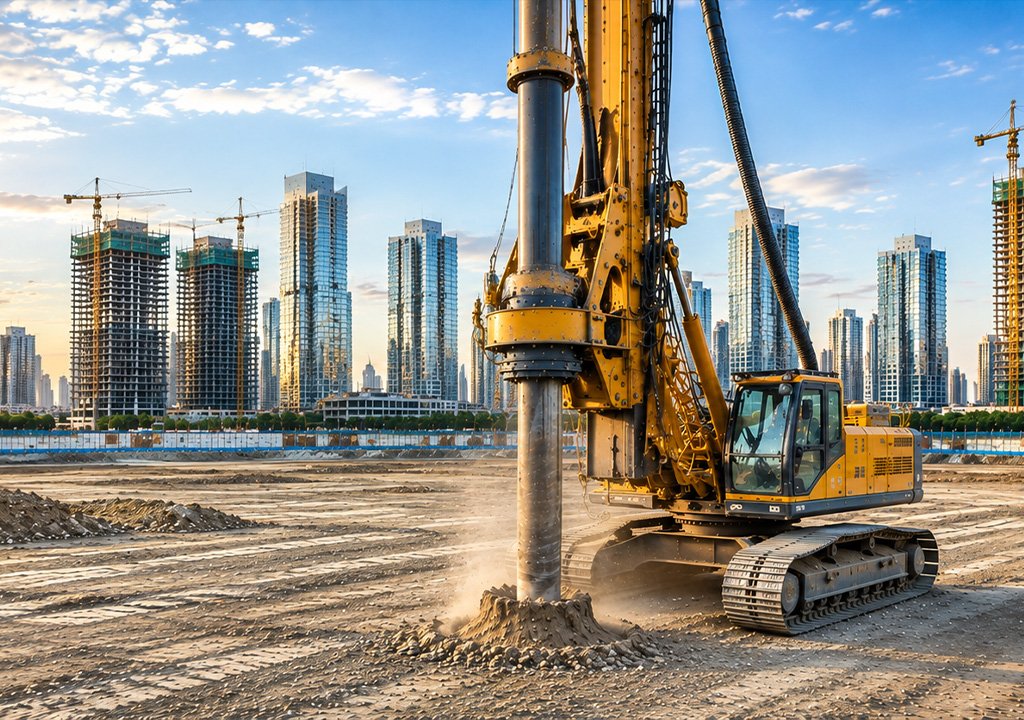
Once the design establishes pile type, dimensions and performance requirements, the contractor develops a buildable method. Bored piles may be selected for large diameters and heavy loads; CFA piles can suit repetitive layouts and low-vibration requirements in appropriate ground; micropiles can address restricted access or strengthening work. Shoring and ground anchors may be needed where deep excavation accompanies the foundation works.
Testing closes the loop
Foundation testing provides project-specific verification. Dubai Municipality lists soil and foundation testing regulations and building-control procedures for pile load tests and foundation levels. Depending on the project, verification can include load tests, integrity tests, material tests and installation records. Testing should be planned with the construction sequence rather than added at the end.
PDS Piling: foundation execution built around site conditions
PDS Piling & Foundation Contracting LLC provides bored piling, CFA piling, micropiles, shoring, soldier piles, ground anchors, drilling, excavation and foundation engineering support across the UAE. Our construction planning begins with the approved design, available geotechnical information, site constraints and project programme so that the proposed method reflects the actual project rather than a standard template.
Frequently Asked Questions
Why are deep foundations used in the UAE?
They are used where structural loads, settlement criteria, ground conditions or other project requirements make shallow foundations unsuitable.
Are UAE soil conditions the same everywhere?
No. Soil, fill, groundwater, cemented layers and rock conditions can vary between sites and within a single development.
Does groundwater mean bored piles cannot be used?
No. Bored piles can be constructed in groundwater with an approved bore-support and concreting method suited to the site.
Why are boreholes needed before piling?
Boreholes and associated testing help establish the subsurface profile and engineering properties used for design and construction planning.
What is a rock socket?
A rock socket is a portion of a pile constructed into rock so that the pile can develop the resistance required by the design.
Can PDS Piling review a geotechnical report for construction planning?
PDS Piling can review available project and geotechnical information for construction-method planning within its contracting scope; foundation design remains subject to the responsible designer and approvals.